
Alternative · Lovable
Open-source Lovable alternative.
OpenDesign is the open-source, local-first design layer around the coding agent you already use — your key, your files, a curated skill and design-system library.
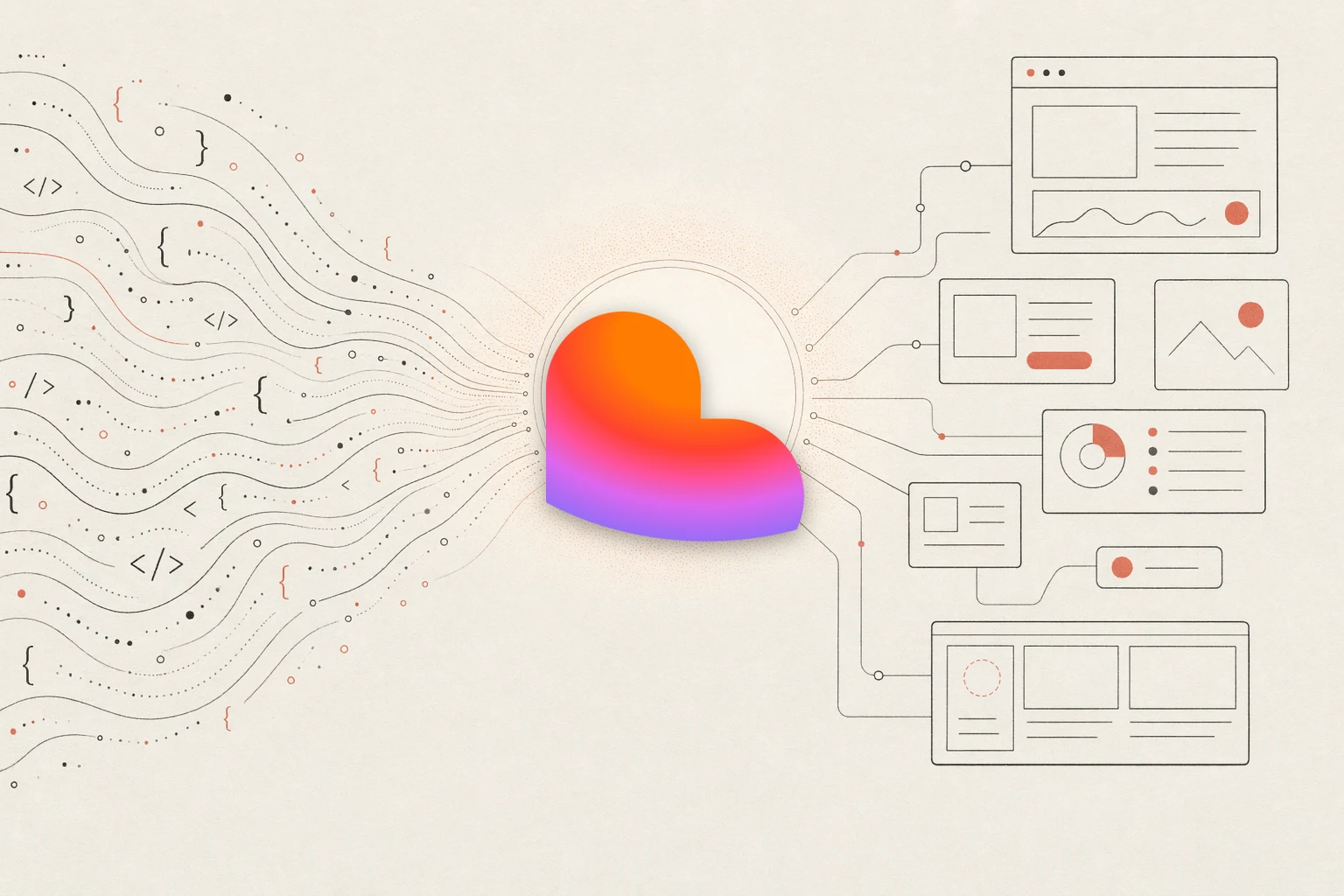
Lovable turns a prompt into a deployed full-stack app. OpenDesign is a self-evolving design agent for Claude Code and other coding agents — local-first, BYOK, Apache-2.0 — focused on producing design artifacts and a portable brand you keep as files in your own repo.
This is an honest comparison: what Lovable is, why teams look for an alternative, how local-first + BYOK changes the economics, a feature-by-feature table, who should pick which, and how to move a design across. It is candid about where Lovable wins.
01
Best Lovable alternatives in 2026
Looking for a Lovable alternative? The best Lovable alternatives are OpenDesign (open-source, local-first), Bolt, v0, Cursor, Replit, and Dyad — here is how they compare and where each one fits. OpenDesign is the pick if you want to own your design artifacts as version-controlled files instead of state inside a hosted app-builder.
| Tool | License | Pricing | Best for | Open source |
|---|---|---|---|---|
| OpenDesign | Apache-2.0 | Free app · BYOK (pay your own API) | Design-first artifacts you own as files | Yes |
| Bolt (bolt.new) | Proprietary | Free tier + paid | In-browser full-stack app prototyping | No |
| v0 (Vercel) | Proprietary | Free tier + paid | React / Next.js UI generation | No |
| Cursor | Proprietary | Free tier + paid | Agentic coding inside an IDE | No |
| Replit (Agent) | Proprietary | Free tier + paid | Cloud IDE with build-and-deploy | No |
| Dyad | Open source (Apache-2.0) | Free, local | Local open-source app builder | Yes |
- OpenDesign: The open-source, local-first, design-first pick — #1 for people who want to own their design artifacts as files, not a Lovable clone. Apache-2.0, BYOK, drives the coding agent you already use. Best for design artifacts and a portable brand you keep in your own repo.
- Bolt (bolt.new): Hosted, proprietary app builder that runs the dev environment in the browser. Best for quickly prototyping a running full-stack app from a prompt.
- v0 (Vercel): Generates React / Next.js components and UI from a prompt, tuned for the Vercel stack. Best for front-end UI and component prototyping.
- Cursor: Agentic AI coding inside a full IDE. Best for developers who want the agent embedded in their editor and codebase.
- Replit (Agent): Cloud IDE where the agent builds and deploys from one place. Best for going from idea to a deployed app in the browser.
- Dyad: The other open-source, local option — a free, local app builder (Apache-2.0). Best for self-hosting a prompt-to-app builder with your own keys.
Where OpenDesign fits honestly: it is a design layer around the coding agent you already use — BYOK, Apache-2.0 — so it is the Lovable alternative for people who want design artifacts as version-controlled files rather than a hosted app-builder. If you specifically want a hosted prompt-to-app builder, Lovable, Bolt, or Replit fit better.
02
Is there a free, open-source Lovable alternative?
Yes. OpenDesign is free and open-source — Apache-2.0, BYOK, so the app costs nothing and you pay only your own provider API spend — and is the design-first option. Dyad (Apache-2.0) is the other open-source option: a local app builder you can run for free. Both are free to run, and between them they cover the two high-intent needs behind "free open-source Lovable alternative": design-first artifact ownership (OpenDesign) and a self-hostable app builder (Dyad).
03
What Lovable is
Lovable (lovable.dev) is a hosted AI app builder: describe a product in natural language and it generates and deploys a full-stack web app — frontend, backend, and database wiring — that you can host in one click. It is genuinely good at going from prompt to a running app.
It is closed-source and runs in the vendor cloud, billed by subscription and per-message credits. That is a different posture from OpenDesign, which is a local-first, open-source design agent you point your own coding agent at — and the two overlap on prompt-to-UI, not on hosting a backend.
- Vendor: Lovable (lovable.dev) — hosted SaaS
- Pricing: subscription + per-message credits
- Primary output: a deployed app, plus code export
04
Why teams look for a Lovable alternative
Teams start looking past Lovable when they want to own the output, control spend, and keep design as portable, version-controlled assets rather than state inside a hosted project.
- Own the output: Designs and code should live as files in your repo, not inside a hosted project you can only edit through one UI.
- BYOK economics: Bring your own provider key so API spend bills to your account, instead of paying per-message credits on top of a subscription.
- Agent choice: Drive design from the coding agent you already use — Claude Code, Codex, Cursor, and more — not a single vendor-managed model.
- Open source: Apache-2.0 and self-hostable: fork it, rebrand it for your studio, or embed it in CI.
05
Local-first + BYOK, explained
OpenDesign runs a desktop app, a local daemon, and Markdown skill and design-system catalogs on your machine. No design output is forced through a vendor cloud, and your brand lives in your repo as a portable DESIGN.md file every skill respects.
You bring your own agent key. Credentials stay in local config or environment variables — OpenDesign never proxies them — and the API spend bills directly to you.
06
OpenDesign vs Lovable, feature by feature
| Feature | OpenDesign | Lovable |
|---|---|---|
| Primary job | Design-first artifacts + portable brand | Prompt-to-deployed full-stack app |
| License | Apache-2.0, full source on GitHub | Closed-source, hosted product |
| Runtime | Local daemon on your machine | Vendor cloud |
| Agent | BYOK: Claude Code, Codex, Cursor, Gemini, OpenCode, Qwen | Vendor-managed models |
| API spend | Bills to your account | Per-message credits / subscription |
| Design system | Portable DESIGN.md in your repo | Per-project styling |
| Output ownership | Files in your project directory | Hosted project + code export |
| Hosting / deploy | You own deploy; not bundled | One-click hosting included |
| Self-host | Yes, run anywhere Node 24 runs | No |
| CLI / CI | Yes via od CLI + HTTP daemon | Web UI first |
Where Lovable wins: if your goal is a deployed, hosted full-stack app with the backend wired up for you, Lovable does that out of the box and OpenDesign does not. OpenDesign is design-first.
07
Who should pick which
Pick Lovable if:
- You want a deployed full-stack web app from a prompt with zero setup.
- You want one-click hosting and the backend wired up for you.
- You prefer a hosted UI and per-project credits over local files.
Pick OpenDesign if:
- You want design artifacts and a brand as version-controlled files.
- You want BYOK with your existing coding agent.
- You want open source you can fork, rebrand, embed in CLI, or self-host.
- You want one DESIGN.md per brand that every skill respects.
08
Moving a design from Lovable into OpenDesign
There is no automatic import from Lovable today; start design-first with a one-time brand-extraction run.
- Install OpenDesign from the quickstart.
- Open the web UI and point your agent at a Lovable project or screenshot you like.
- Ask the agent to extract the brand into a DESIGN.md file.
- Pick a skill and render it against your new brand.
From then on, every skill renders in your brand without re-prompting — and the files stay in your repo.
FAQ
FAQ
-
01 Is OpenDesign a drop-in replacement for Lovable?
No. Lovable ships deployed full-stack apps; OpenDesign is design-first and produces artifacts you own. They overlap on prompt-to-UI, not on hosting a backend.
-
02 What is the best free Lovable alternative?
OpenDesign — it is free and open-source (Apache-2.0, BYOK, so you pay only your own API spend) and is the strongest pick for design-first work. If you specifically want a local open-source app builder instead, Dyad (Apache-2.0) is free to run.
-
03 Is there an open-source Lovable alternative?
Yes — OpenDesign is an open-source, local-first alternative focused on design artifacts (Apache-2.0, agent-native), and Dyad is an open-source local app builder (Apache-2.0). Both are free to run.
-
04 Lovable vs Bolt vs v0 — which should I use?
Lovable is aimed at non-technical makers building full apps from a prompt; Bolt (bolt.new) builds a full-stack app in the browser; v0 (Vercel) generates React/Next.js UI and components. Pick OpenDesign when you want to own your design artifacts as version-controlled files rather than state inside a hosted builder.
-
05 Can OpenDesign build a full app like Lovable?
OpenDesign focuses on design artifacts, prototypes, and brand systems. For production backends and one-click hosting, Lovable is the better fit.
-
06 Which agent does OpenDesign use?
Your choice — BYOK with Claude Code, Codex, Cursor, Gemini, OpenCode, or Qwen. API spend bills to your account and credentials are never proxied through us.
-
07 Is OpenDesign really open source?
Yes. It lives at github.com/nexu-io/open-design under Apache-2.0 and is self-hostable.
-
08 Can I keep using Lovable alongside OpenDesign?
Yes. Many teams prototype design in OpenDesign and ship apps in Lovable; migration is manual today.
-
09 Is OpenDesign affiliated with Lovable?
No. OpenDesign is an independent, open-source project. Lovable is a trademark of its owner; this is an unaffiliated comparison.
Design-first, in three commands.
Star the repo, grab the desktop build, or run the install in your terminal. Your DESIGN.md system stays in your repo from the first render onward.